



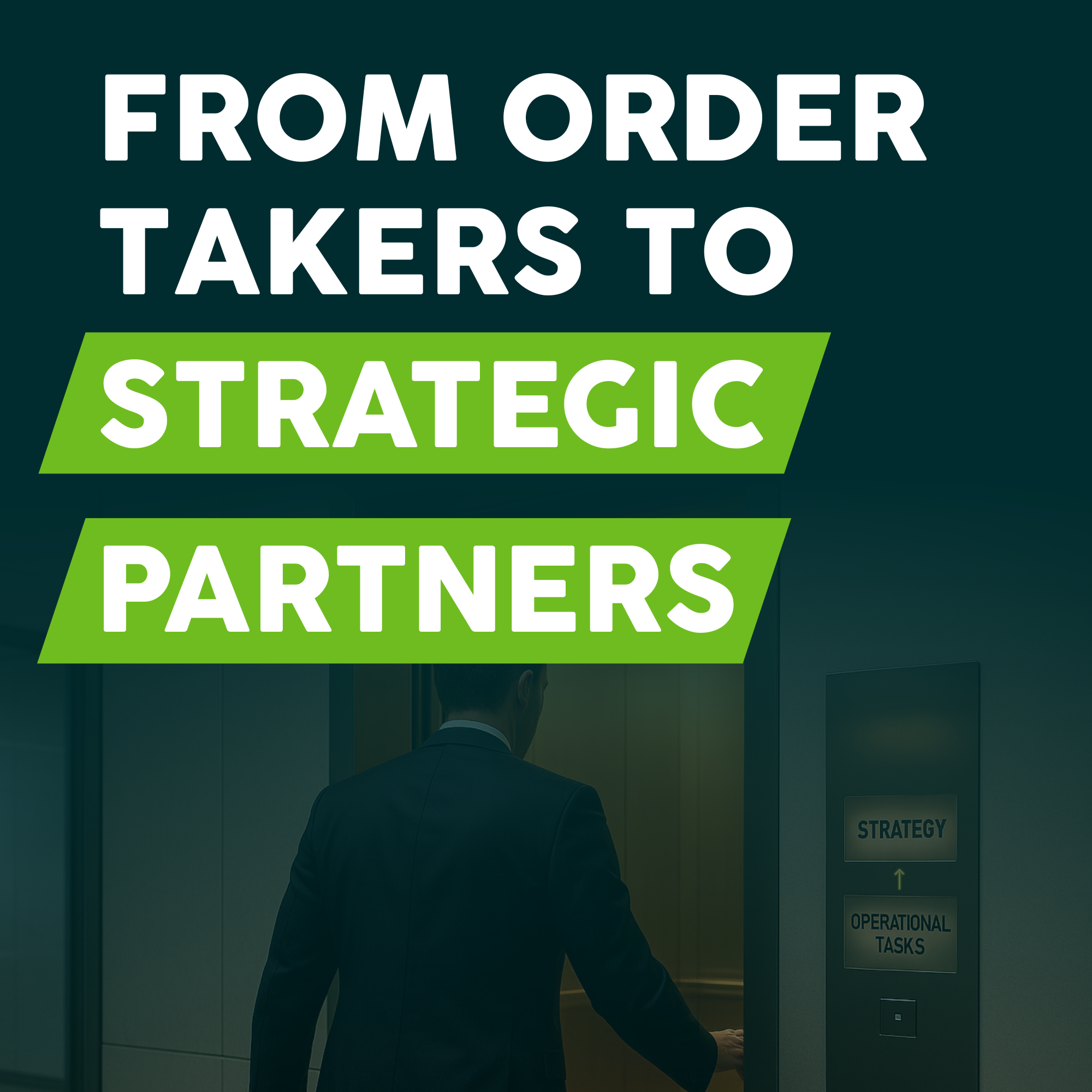
From Order Takers to Strategic Partners
In this episode, she sits down with John Wiedenheft, Digital Marketing Operations Director at Great America Financial Services, who shares his journey of leading a 15-member marketing team through an Agile transformation.
Watch the Full EpisodeEpisode Transcript
For those marketers who spend our days racing from one last-minute request to another, sitting down with our stakeholders to have a real strategic conversation as equals sounds like a fantasy. Well, my guest this week is living that fantasy. every day, thanks to putting in the hard work of transitioning his marketing team of about 15 to Agile over the past year. After getting a taste of what it's like to be on a real Agile team by joining a cross-functional platform team, Jon was hooked. But it took a little while to convince the rest of the marketing department that changing up their entire suite of processes was gonna be worth it. Happily, he got an assist from an unexpected source and the transformation was off and running. But this is not my story to tell, so let's get started and hear from this week's special guest, Digital Marketing Operations Director, Jon Weidenheft.
Welcome to the Agile Marketing Edge, the first podcast dedicated to turning Agile theory into real-world marketing breakthroughs. I'm Andrea Fryrear, CEO of Agile Sherpas, and your guide on this climb to smarter, faster, outcome-driven marketing. Every week, we unpack the what, who, and how behind Agile marketing, from building high-velocity workflows and slashing waste to measuring what really matters and scaling success across teams. You'll hear quick-hit strategies you can deploy today, plus candid stories from marketers who've traded chaos for clarity and never looked back. Hit Follow wherever you listen, and let's carve the next switchback together.
All right. Thank you so much for taking the time to join us today, Jon, and let's get started with just, uh, a quick introduction. Just maybe tell us a little bit about your background and what's your role right now. And I always love to know kind of how people got into marketing agility 'cause it's always a very interesting story about how you found your way into this, this intersection.
Yeah. So my current role is that I'm the Director of Marketing Operations at Great America Financial Services. We're a equipment finance company that, uh, provides services in, in the 50 United States.
I've been in this role for about seven years now, uh, seven years coming up in this, uh, next year, and 14 overall at Great America.
And I would say I think a lot of people who have been in marketing operations for even just a little bit have very similar stories of how they got into it. You just kind of fall into it.
And, um, so I started at Great America as really a digital marketing specialist, so email and, and social media and things like that. And, and really as both the team grew and as the organization grew, so did that need for someone who understood technology and the software that marketing is, is, you know, is commonplace now. But 14 years ago, we were still using Adobe products on, on DVDs, you know. So, uh, things have changed, uh, tremendously in that time, and I just happened to be in the right place at the right time, um, and, and working with marketing on, on the creative side and then liaising with a lot more of the technical people within our company, IT, sales force people, um, developers. And it's just been a really great place to be, and it's, it's just a growing opportunity for, for anyone. So, that's, that's kind of where, where I came into, into my role. And is that intersection with the IT part of the organization, is that kind of cross-pollination how you first got exposed to Agile ways of working?
Yeah. So a few years ago, we started ... our company started going through an Agile transformation. And so a lot of the, the teams that focus more on developing and engineering and things like that started organizing into specific product or platform teams. And so as the main owner of, uh, HubSpot for, for our company ... Oh, sorry. I hit a key and something happened on my side.
I apologize. No worries. Um, I don't know if you wanna restart that question, so. Sure. Yeah, we'll go back. I'll ask the question. Sorry about that.
No problem. And so was it that intersection, that kind of cross-pollination with the IT part of the organization that was your kind of introduction to Agile ways of working? Yeah. So a few years ago, uh, a lot of our product teams, they, they weren't product teams at that point, but our developers and engineers started going through that Agile transformation, organizing those, uh, people into product and platform teams. And so as the owner of HubSpot, you know, one of the, the main tools that we're using to communicate, there was a platform team, uh, centered around communication and the technologies that we use to communicate with our customers and both internal. So, I was a part of that platform team for, uh, roughly a year. and had the full Agile experience of, you know, PI plannings, uh, every 12 weeks. We had our daily stand-ups.We had, um, we had our scrum master assigned to the team, so it' was just, it was this... You know.
And none of us knew what we were doing 'cause the whole company was trying to figure it out at the same time, and it was just this really great experience.
Even though we're figuring it out, we don't necessarily know how this is gonna look, how it's gonna turn out. But at the end of that year, it was one of the best years that, that I've had in the 14 years here at Great America. And just the clarity that you had in, in the work that needed to be done, the clarity in the value that the work that you were doing brought and how that's bringing value to the organization or to the customers.
Like, that was, that was wonderful and that was one of the best parts of, of going through that, that process. I knew that our team, our marketing team, was kinda struggling with, with a lot of aspects of project and work management and it was almost night and day difference of how I felt between working on these two teams. And it had nothing to do with the people, had nothing to do with the work.
It was, it was really just like, "How do we get that clarity? How do we set those priorities?" And so it was just... That really started that journey of, "How can I bring this feeling that I'm, that I have to the rest of our marketing team?"
Yes, and this is exactly why I wanted to have Jon on this show because he's at that moment of just excitement and getting started, and he's very generously offered to kind of come on and share what it's been like for him and the teams as they are, uh, getting started on the journey and how they, you know, really launched and what it's been like and how they got buy-in. So, that's where we are gonna focus our conversation today, 'cause those of us who have maybe been doing this for a little while, uh, we kind of forget the joy and the excitement and that spark of what it's like to, to feel the difference of moving from that, that disconnected and disjointed and, and kind of reactive way of working and, and the, the joy of, of Agile for the first time.
So, I'm really excited to, to hear the excitement in your voice, Jon, and, and get back into that, that moment of transition. So, let's talk about kind of how this got started for you and the team.
Like, what really... You had this moment, right? You had this experience, but what allowed you to help push others around you, kind of convince them to come along on the journey- Yeah. ... with you? So, as, as I was thinking through, uh, this conversation today, I, I think there's really two drivers for, for our team and, and, and really what kinda kicked it off, other than, than my own experience, and one was the internal drive for our team.
So, we have a, we have a marketing team of, like, 15, 16 people, um, and it's grown tremendously over, over the last few years. I was marketing team member number three, so it's, it's grown quite a bit, um, but we have a, we have a lot of different functions on that team. We have graphic designers, we have videographers, we have a few marketing directors, marketing managers and, and so we all wear a lot of hats, we're all trying to move things forward, but we all have different ways of, of getting our work done. Um, some of us have pads and papers and Post-its and other peop-... We were using Microsoft Teams as, as our work management and, um, but even with all of that, our, our team was really struggling to communicate the value of, of what we're doing on a regular basis to our stakeholders, whether that's internal, whether it's external customers. Um, you know, our customers are really everyone inside the company, but also everyone outside the, the company as well, so we have a lot of stakeholders and, and yet we, we know what we're doing, we know the value that we're providing and, and how busy we are, but we were really struggling with whether it's quantifying that or being able to tell that story to other leadership or to other parts of the company, saying, "Well, th- this is what's going on. This is why we can't prioritize," or, "Hey, maybe in a month we can get to that project." So, that was key part number one, and the, the second driver came from outside of our team. And so we had a data analyst and a business architect who went to HubSpot Inbound last fall, and they just went to, to learn more about HubSpot and things like that, and they came back and did a debrief about a year ago in November and they... One of their takeaways was, "Hey, we think that marketing should adopt Agile practices and, and get into Jira with, uh, the rest of our product and platform teams, because you're looking for that alignment between marketing and, and what the rest of the business is doing, right?" And I turned to my boss, our VP of marketing, in this debrief and I said, "I didn't pay her to say this." And the business architect just looked at me like, "Wait. Y- like, you've been talking about this? You, you want to do this?" and I was like, "Yes. Yes, absolutely." And, and so that really kicked things off. She had already had, like, a Jira board mocked up and, and had, like, some example social media posts and, and so our VP of marketing was like-... you could see it, right?
It wasn't just kinda theoretical at this point. And then so it's, "Okay, let's go." So January of this year, that's when we started doing a lot of those, uh, workshops and really just started hitting the ground on that.
But it was really those two things, the combination of that internal need but then also someone who had a, a lot of experience of working on those product teams and, and driving some change as well, coming from the outside and saying like, "Hey, this, this would be a good match for you guys." Right. So while John did not bribe his colleague, you know, if you have to bribe, then you don't need to be above that. Maybe that's the, the impetus that you need. And if you need some, uh, visualizations of how this might work, we do have a great blog article that shows ten boards, ten real marketing boards that are mocked up, and we'll put it in the show notes.
So if you don't wanna have to go through the, the work of mocking these up, we have them and you can use those to, to put into a deck or whatever you might need to help get some buy-in. So we can help you out if you're looking for a ne- nice, easy way to get started and you wanna get over that hurdle. So you have this inflection moment and everybody's on board and you're getting started. So then after that, what really changed? Like, how were things different? Tell us about what the process and the- Mm-hmm. ... roles are looking like now, and how is that different in, from your pre-agile world?
Yeah. One thing that we struggled with was, was the roles part, um, especially... So, so our company is, is SCRUM and, and SAFe organized, and, and so that, and that was my experience as, as a practitioner was, that was how our teams were organized.
And s- but I had never come from the, the planning part of it and the management of an Agile team. And so all of that was, was brand new to me as well. And so really figuring out for our team, where you have so many diff- different roles and functions within the marketing team, it was, it was difficult for us to understand, how do those Agile roles, the traditional roles, fit within our team? And that required a lot of conversations, but it really got down to, "Well, what do those people do? What does a, what does a SCRUM master do? What does a product owner do?
And, and then what do the participants do?" And so it was really getting down to, "Well, what's the core function here?" It's like, "Oh, okay. All right. So John, you can function as, as the SCRUM master." Um, you know, "Our marketing directors are our product owners, and, and then we've, we've got the rest of the, the teams filling things out."
So we haven't changed our, our roles or titles or anything like that. Um, I think from the research that we were doing, we're not alone in, in, in that. Like, we're not alone in that, like, it, you're not gonna have a SCRUM master on your marketing team. Um, and so how can we self-organize? How can we, you know, take these principles, set up a system and processes that are going to serve us and, and keep things going forward even if the individual changes or, you know, even if you, you change roles or something like that? So, um, so the roles didn't change. We knew we weren't gonna have a lot of extra help, like a SCRUM master or anything like that.
But what really changed were our processes, and, and that, that I think has been the key for us. But it was also, it took a long time for us to get there, and I say long, like, it was three, four months, but it was three, four months of several workshops and, um, offsite meetings where we just kinda locked ourselves in a room. And the business architect who, who came to us, you know, back in November with, "Hey, we think that you should be doing this," she facilitated all these meetings, she facilitated all the workshops, and one of the things that surprised the people on our team was there was no technology as a part of that conversation. And so as we talked through the problems that we were facing as a team, as individuals, so much of it came down to process. Like, it wasn't consistent or there was no established process. Um, there's... Even if there was a process, it wasn't documented anywhere, so you don't know, like, "Well, this person does this and then, you know, person B does, does that."
None of that was documented. It was kind of all whether it was within your own head or institutional knowledge. Um, so that was, that was really interesting. The other thing that came out in those workshops was communication and are we communicating at different parts of that process? So are we communicating expectations when someone asks something of us? So if they s- if someone fills out a marketing request form, are we communicating with them a certain level of expectation of when we're gonna get that, get that request back to them? Are we communicating what the status is?
Um, so... And we weren't. There, you know, again, it wa- there wasn't an established process. There wasn't anything, uh, documentation-wise.... that was established of, of here's how we do our work.
We just kind of have our task list and, and we check the boxes off of that task list. And so when we got done with all of that work, we realized that what we initially thought was a technology problem, we saw as limitations within Microsoft Teams, which is what we were using for our work management, it was really issues with a lot of other things. The processes, documentation, communication, setting those right expectations, and very little of it had to do with technology. Now, there were some technology things that we, that we wanted and that, like, we were limited by, but at the end of the day, it was process and communication and, and those are the things that I feel like have made the, the biggest change on our team so far.
Yeah. So two things I just wanna follow up on, and I think you're absolutely right. I've seen this many a time, that the, the roles are not going to become a dedicated Agile role- Mm-hmm. ... like you would see sort of in a traditional implementation, right? Marketing teams are not gonna get a full-time scrum master and a full-time product owner, much less a, maybe a release train engineer and all of those kinds of things that you might normally see. But, um, for you all, did you... What you did, I'm just wanna clarify and make sure- Mm-hmm. ... I'm following you. You, for instance, now have some scrum master duties in addition to your marketing ops job. So that was sort of an add to things you were already doing. And your marketing directors have product owner responsibilities like prioritization- Mm-hmm. ... for ins- in addition to what they were doing before. Yeah. I, I think it's, it's an evolution of, of the roles that, that we currently have.
I, I don't, I don't think we see it as we're wearing two different hats, right? Mm-hmm. I don't think we're... Like, I, I don't see my role as like, oh, I'm, I'm scrum master 10% of the time and my marketing ops the other 90%.
I, I think what we've done on our team is, is really internalized what th- the core value of, of those roles are. And so for me, what that comes through and, and this is how I led the... Or I hoped to lead our change management through this was, was the blockers, the obstacles.
Like, what is in your way from adopting this? What is in your... And what is in your way from changing from Teams to, to Jira? And to now when we have our, our standups, well, okay, you've, you've flagged this, what, what can we do? Um, is there someone that I can help you talk to? Or is it just... You know, so... But that was the example that was given to me too. And, and so it was just kind of learning by watching the other scrum masters and, and teams that we had at work. And, and also those scrum masters saying, "No, this is, this is my role." Like, "I am here to help.
I'm not here to tell you what to do. I, I am here to help in, in whatever way that is. Can I set up a meeting? Can I call someone? Can I email someone? Can I, can I do something for you so that you can keep working on this?" Right? And, and I really see that as part and parcel with marketing ops.
And I, I mean, I see marketing ops as not necessarily doing the marketing that, that we do day in and day out, but how, how do we make it better? How do we make it scalable? How do we make it more efficient?
Um, and how do I help my team do the work that, that they're doing? So I, I think that's a lot of how our team has looked at these roles is, is really it's clarified what, what our role is within the team. So I'm an enabler. I can help move things forward, make things a little bit easier or efficient. Um, you know, our marketing directors, if they're the product owners for, for their industry, then they've got that industry knowledge. They've got that experience. They're setting those priorities for their business unit and, and the marketing. What are the things that the marketplace is saying? And they're bringing that back and working together at that higher level, just like a product owner is gonna be. So, um, it's... We don't call them those roles, but I think we definitely have had them within our team.
Yeah. I love that 'cause it is back to why those roles exist in the first place and what is their core value that they're bringing to an Agile team. So I love that. And I do just wanna underscore and emphasize one other thing that you said, which is that a lot of the challenges that a team is gonna face early on are not about the tool, right? Like, a lot of people think, "Well, let's just get a project management tool in here, whether it's Jira or Asana or whatever it is, and then we are good. We've solved the problem. Just buy the tool and get everybody in it, and then we've, we've created a solution." But there are so many other deeper needs like process documentation and communication that are n- they have to be in place or no tool is really going to get you any farther down the road toward improving your ways of working.
So just wanted to underscore that for everybody that's listening to make sure that you heard what John said. Okay. So, uh, moving on to the next question here. Uh, I'm curious about what part of your Agile ways of working do you think have...... Made the biggest difference for your team so far? You're still- Yeah. ... a little early, right? Yep. Not quite a year in.
Yep. But at this point, what do you think's making the biggest difference? I think one of the biggest things has been adjusting our, our processes. And, and the core example for that is, is really our meeting cadence. And so we don't have daily standups. I, I did have that when, when I was on our platform team. S- we don't have that on our marketing team, and then really that was, that's part of the adjustment. So we were having monthly meetings before this, uh, before this transition, and so I was like, well, going from monthly to daily was, was probably gonna be a, a lot, right?
And we were used to 60, 90 minute team meetings. We were used to those long team meetings where there's a big agenda, we're trying to get through everything, and somehow you still don't get through everything, right?
And, and so I do think that there was a lot of concern about, well, daily meetings? Like, we already have a lot. So we switched to weekly, so we have a weekly standup on Thursdays. But before that, what has really shifted things is Monday morning.
So Monday morning, each of the different functions within our marketing team have a prioritization meeting for that week. So there's a prioritization meeting for graphic designers, for our videographers, for myself and marketing operations, um, and then within our, within our marketing, uh, units themselves they are, they are discussing, is there anything that fell off last week that didn't get completed? What are our priorities for, for this week? And, you know, at the end of the week, what do we want to say we got done, right? So we have all that. The addition of communicating to the team is we then put that for our- for ourselves in a, in a teams chat. And so every Monday morning the whole team is saying, "Well here, here's my schedule for the week. Here are my priorities for the week." And you have that visibility as a team of what everyone is working on, right? So, so no meeting, um, for, for that team-wide communication. We're, we're just communicating that out. Again, all of this is in Jira, so like anyone wants to go in and look, they, they can. You work for a few days, move things forward. Thursday we have that team-wide standup. When we started this, I think we were averaging like 60 to 90 minutes for, for this standup. And, and it really was, hey, we've got a list of things that we need to do and, and every person just kinda goes through their list of what they got done, what they have coming up. And then it wasn't, no one was really happy with, with how that was, was working. It wasn't really serving us. And, and so we had some honest, clear conversations like, "Hey," like, "I understand," like, "you wanna talk about this, but let's, you know, let's focus on what's blocking us or what's preventing us from, from getting some things done."
So we reorganized the meetings based off of that and it's really based off of two Jira filters and that's how we run our, our standups now, is, is really just these two Jira filters. One for any issue that's flagged and then the other for any issue that is, is overdue or coming up, like, today. And so that's how we run those meetings now. And a couple weeks ago, that meeting was five minutes. Um, you know, on average now it's ab- about 15 minutes. And I think, like, I'm reflecting on that and that's a huge change for our team of going from, you know, 60 to 90 minutes down to five or 15 minutes on, on average. Like that's, that's just awesome.
And we're still getting everything done, right? Um, and the other part of that too is like, our standups when I was on the platform team, they were still about 15 minutes, but we had four people. And so the fact that we can really get through the work or any obstacles for, for 15 people in, in different marketing functions, like that's just been a huge win for us of, of really just getting everything down into that meeting. So that's, that's really like day to day that's been one of the biggest wins for our team so far. That's amazing. And are you supplementing that with any, like, quarterly planning at a higher level? So the interesting thing is, uh, I was thinking about this, is you know you've got the Agile concept, right, of MBT.
And, and I think we have this mindset where everything had to be perfect as we went through this transition and we had to have all the Jira fields correct, we had to have all of our processes correct, we had... And, and so a lot of the conversations in planning meetings kinda would sometimes go down that road. And we had to refocus of like, well, what's, what's the one thing that we really need? What is gonna take us to at least one step better than, than where we're at today? And...... take that process over the whole six months or, you know, almost a year that we've been doing this, we didn't get to five-minute stand-up meetings overnight.
That, that wasn't something that, that we started with. But over time, we, we made little adjustments to that and to that whole communication and, and process cycle. And, and what I'm starting to see on our team in the last couple of weeks is, so one of our marketing directors, uh, just had a semi-annual planning meeting, reporting meeting with, with his, uh, sales leaders, his business unit leaders, and he went in with the expectation of, "This is gonna be mid-year, like a mid-year review of, of where we're at, how things are going," and their feedback was, "No, this was great. Let's do this quarterly." And, and as I was thinking about that, I'm like, well, it's, it's really the same process, but at a scaled up level. You know, we communicated at the get-go of here's our strategic goals, here's how we're gonna try to achieve those, these are the projects or tasks that, that we're gonna break it down into, and, and so we're reporting on that week in and week out, but now we've scaled up that communication and that feedback cycle to the higher level priorities and, and that quarterly or mid-year review. It's, it's really not anything different than what we're doing on a weekly basis; it's just kind of scaled up.
And it's... I don't know if that was intentional for, for our team to, to do that, but I think a lot of what we've been changing is we've been internalizing it so much almost now that it, it really is changing the way that, that we're going about our work, and the communication is clear, the prioritization is clear, and I think other people, other leaders are starting to see that, and, and when they do, when we present the clear outcomes, when we present the clear strategy and prioritization, "Okay. All right. Sounds good. Let's do more of this." And, and that's what we want, right? Like, we want to be seen as a business partner, as someone who can provide value to the business, and, and really not, you know, the arts and crafts department. Such a huge win. Like, that alone right there is worth any of the investment of time and energy just to be back in the strategic conversation. Yeah. Like, that is massive. So, uh, we're coming up on our time here, so I wanna close with, for the people listening who want to get to where you are, to be in that faster cycle, to be looked at as a strategic partner again, and to be hearing those, those people saying, "Yes, I love this. Let's, let's do more," what would you suggest as a good starting point? What's a good first step for the people who wanna get to where you are right now? I th- think it comes down to, for, for me, it was three things. One, technology won't solve your problems.
So there, there's... It's gonna help, but it, your problems aren't technology. Two, really define your goals. I, I think you have to understand why you want to go down this road, um, what, what are the problems that you're facing as, as a team, as an individual on that team, um, and then understanding where you want to go. What do you see as, as that destination? And I think for us, that was really we want leadership in other functions to understand the value, see the value that, that marketing is bringing, that we're just not checking boxes off a list, but we're actually a strategic partner, like you just said, we're a strategic partner for the organization in that we can bring that type of value. And so that was really our guiding star in terms of, of the goals. You have those two things, defining your, your problems and, and really defining those goals. I think that'll get you most of the way there, because if you've got that, the technology doesn't matter. You, if you are clear on, on those things, you know, for, for any old school practitioner, you can do it with Post-it notes or, or sticky notes, right?
And, and so you have that. The third thing, and this was for me personally, having champions to help you, whether that's someone internally at your company or, or externally. I know that I spent some time talking with you, um, over the last year and, and having some of those conversations, and so having a champion who can take some of that burden off of you as, as the changemaker, like, that is incredibly powerful as well. So it, sometimes it feels like it's too much for, for one person. A lot of the time it feels like it's too much for one person, and so having another champion who can really, whether it's guiding you or helping you move s- part of it forward, um, that is, that's really a, a key point for me too. Amazing. Well, thank you so much for your time, Jon. This has been fantastic to hear about your journey, and I appreciate your generosity in sharing how you got here and, uh, wish you all the best on the next phase of your, of your Agile climb. And for those of you listening who are hoping to find a partner to get you started, of course, we hope that you will consider Agile Sherpas to be that partner for you. We are always available to help at agilesherpas.com, and until next time, I'm your host, Andrea Fryrear. Remember, the struggle is real, but so is Aile marketing.
Enjoying The Agile Marketing Edge?
More From The Agile Marketing Edge
Episode Library →
The Agile Marketing Edge Podcast offers insights on how to make Agile actually WORK for marketing teams. Browse the entire episode library.
Episode 19: The Worst Time to Pause Agile Is During a Crisis →
Why pausing Agile during a crisis is a mistake? From dealing with uncertainty to leveraging unusual situations for innovation, discover five compelling reasons to stay the course.
