




Key Takeaways
- Agile team management is about leading people—not just managing tasks—so teams can adapt quickly, collaborate effectively, and continuously improve how they work.
- In modern marketing environments, Agile practices alone aren’t enough. Without Agile team management, workflows break down under pressure from shifting priorities, increasing complexity, and growing expectations.
- The role of an Agile team manager is to create clarity, remove blockers, enable ownership, protect focus, and support continuous improvement—not to assign and control work.
- High-performing Agile marketing teams balance structure with flexibility by making work visible, limiting work in progress, and establishing clear prioritization and feedback loops.
- Continuous improvement is a core part of Agile team management, driven by regular reflection, small experiments, and incremental changes that compound over time.
- Common management mistakes—like micromanaging, overloading teams, or turning standups into status meetings—can undermine Agile ways of working even when the right practices are in place.
- Measuring Agile team performance requires focusing on flow and outcomes (throughput, cycle time, predictability, team health), not just individual productivity.
Agile team management is the practice of leading people—not just tasks—in a way that enables adaptability, accountability, collaboration, and continuous improvement. For modern marketing teams, that means creating an environment where work can move quickly, priorities can shift without chaos, and teams can consistently deliver value despite constant change.
In 2026, marketing teams are operating in one of the most complex environments they’ve ever faced. Channels are multiplying, stakeholder expectations are rising, AI is reshaping workflows, and the pressure to prove impact is higher than ever. Many teams have adopted Agile practices like boards, standups, and backlogs—but far fewer have truly adapted how their teams are managed.
That gap matters. Because Agile isn’t just a way to organize work—it’s a way to organize people, decision-making, and ownership. Without Agile team management, even the best workflows break down under pressure.
The difference between teams that struggle and teams that thrive often comes down to how they are managed. Agile leaders don’t just assign tasks—they create clarity, remove blockers, build trust, and help teams continuously improve how they work together.
In this guide, we’ll break down what Agile team management really means for marketing teams—and how you can apply it in practice to build a more effective, resilient, and high-performing team.
.png?width=1920&height=1080&name=Agile%20Team%20Management%20-%20Body%20Image%201%20(1).png)
Agile Tasks vs. Agile Teams
Managing your tasks in an Agile way and managing your team in an Agile way are two complementary, yet separate, concepts. Bundling them together could result in neglecting one or the other (or giving up on Agile altogether, yikes!).
What’s Agile Task Management?
Agile task management refers to the way you apply Agile values and principles when organizing your team’s work items.
For example, if you’re already using:
- a Kanban board
- WIP limits
- user stories
- planning poker for estimation
then you’re probably applying some form of Agile practice to the management of your tasks. Of course, this is a vital step towards marketing agility.
However, it mainly concerns the team’s work. These practices don’t get to the heart of team management or group organization.
What’s Agile Team Management?
Agile team management is how managers apply Agile values and principles to organize the team itself.
If you can say with confidence that your team members:
- are self-organized
- hold each other accountable for the work they do
- have a shared understanding of the Agile mindset
- have enough feedback loops in their process and use them regularly
- practice continuous mentoring and shared skill sets
...then, you’re a master of your team’s Agile management! However, these team-level shifts are tough to achieve.
While it might take a few days to apply an Agile practice to your tasks, applying Agile practices to your team structure and mindset can be a long-term challenge.
The good news is, the change is well worth it in the end.
Used in conjunction, Agile team and task management have the potential to take your team to far greater heights than they could achieve with just one alone.
What Does an Agile Team Manager Do?
If Agile team management is about applying Agile values and principles to how a team operates, then the natural next question is: what does that actually look like in practice?
In an Agile marketing environment, the manager’s role shifts away from directing work and toward enabling the team to perform at its best. Instead of assigning tasks and tracking individual output, Agile team managers focus on creating the conditions that allow the team to deliver value consistently and adapt quickly.
In practice, that means taking on responsibilities like:
Creating Clarity Around Goals and Priorities
Ensure the team understands what matters most right now and how their work connects to broader business outcomes. In marketing, this often means aligning campaigns, content, and channel efforts to clear strategic objectives.
Removing Blockers and Reducing Friction
Identify anything slowing the team down—whether it’s approval delays, unclear requirements, or cross-team dependencies—and actively work to resolve it.
Enabling Ownership and Accountability
Support a team environment where individuals take responsibility for their work, collaborate openly, and hold each other accountable without relying on top-down control.
Facilitating Communication and Alignment
Make sure information flows smoothly across the team and with stakeholders, so work doesn’t stall due to misunderstandings or lack of visibility.
Protecting the Team’s Focus
Shield the team from unnecessary interruptions, shifting priorities, or excessive work in progress that can dilute impact and slow delivery.
Encouraging Continuous Improvement
Create regular opportunities for the team to reflect on how they work, test improvements, and evolve their process over time.
For marketing teams in particular, this role is critical. With multiple channels, stakeholders, and work types competing for attention, an Agile team manager helps bring structure without rigidity—ensuring the team stays aligned, responsive, and focused on delivering meaningful results.
The Key Role of Servant Leadership
Since Robert Greenleaf coined the term in the 1970s, “servant leadership” has become the go-to phrase for explaining the relationship between Agile managers and their teams.
“The servant-leader shares power, puts the needs of others first, and helps people develop and perform as highly as possible,” says Greenleaf.
In an Agile marketing department, managers, directors, and other people in leadership roles act differently than in a traditional team.
They’re focused on serving the team to help them succeed, not on hitting their organizational targets at any cost.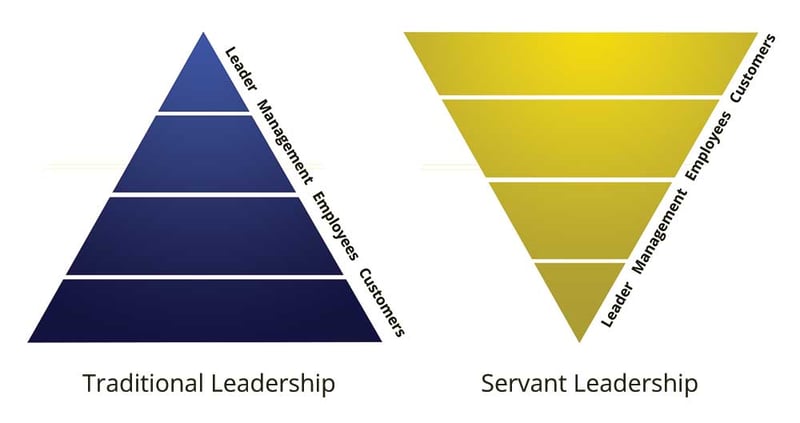
Image from 6Q Blog
As an Agile marketing servant leader, your focus is on:
- Giving and taking feedback
- Creating an environment of trust within the team
- Cultivating other leaders among the team members
- Influencing the team, without commanding them
- Encouraging team members to “go for it!”
Servant leadership is very successful in helping the team (and its leader) focus on quarterly priorities, instead of always fighting daily fires.
It also creates an environment filled with the powerful motivators of modern knowledge workers: mastery, autonomy, and purpose.
How to Manage an Agile Marketing Team
Servant leadership sets the foundation—but on its own, it’s not enough. To truly make Agile team management work, managers need to translate that mindset into consistent, day-to-day practices that help the team stay aligned, focused, and continuously improving.
In a marketing environment where priorities shift quickly and work comes from multiple directions, managing an Agile team is less about control and more about creating clarity, flow, and momentum.
Here’s what that looks like in practice:
Align the Team Around Clear Goals
Make sure everyone understands what the team is trying to achieve—not just what they’re doing. Whether it’s campaign performance, pipeline contribution, or content impact, clarity on outcomes helps the team prioritize effectively.
Make Work Visible
Use boards (Kanban or otherwise) to ensure all work—campaigns, content, requests, and experiments—is visible and understood. Visibility helps teams coordinate, identify bottlenecks, and make better decisions.
Limit Work in Progress and Protect Focus
Marketing teams are especially prone to overload. Too many campaigns, requests, and “quick asks” can quickly dilute impact. Set and reinforce WIP limits so the team can focus on finishing work, not just starting it.
Create Clear Intake and Prioritization Rules
Not all work should enter the system equally. Define how new requests are evaluated, prioritized, and accepted so the team isn’t constantly reacting to the loudest voice in the room.
Remove Blockers Quickly
Pay close attention to where work is getting stuck—approvals, dependencies, unclear requirements—and step in to resolve issues before they slow the entire system down.
Encourage Team Ownership
Avoid assigning work whenever possible. Let the team pull work, collaborate on solutions, and take shared responsibility for outcomes.
Establish Regular Feedback Loops
Use standups, retrospectives, and check-ins to keep communication flowing and continuously improve how the team works. The goal is not just to deliver work, but to get better at delivering it over time.
Balance Structure with Flexibility
Provide enough structure to keep the team aligned, but avoid rigid processes that prevent adaptation. Marketing work rarely follows a perfect plan—your management approach shouldn’t either.
For marketing teams, this combination of clarity, visibility, and adaptability is what turns Agile from a set of practices into a real competitive advantage.

Own the Work You Do
The Agile mindset requires “respect, collaboration, improvement and learning cycles, pride in ownership, focus on delivering value, and the ability to adapt to change.”
Accountability is a big part of cultivating a high-performing team that has a shared understanding of the Agile mindset. In fact, accountability is a quality of Agile itself.
Good Agile managers are successful in building an environment in which projects are built around motivated individuals, who can be trusted to deliver on their commitments.
Managers can build an environment of accountability by:
- Making sure project expectations are clear from the start
- Encouraging communication within the team
- Providing the resources the team needs to execute the tasks at hand
- Keeping channels for feedback open and in frequent use
- Being an example by delivering on their own commitments and doing so humbly
A strong mindset of accountability is the secret sauce to cultivating high-performing Agile teams that consistently deliver value for their customers.
Before you keep reading, The Ropes gives you 100+ hours of FREE Agile marketing courses, exclusive resources, and certification & coaching giveaways — completely free.

Love Your Process
Agile marketing teams need to be involved in the way their process is structured in order to participate in it wholeheartedly.
At the end of the day, the team members are the people closest to the work. Also, they’re most aware of their group dynamic and how they collaborate optimally with each other.
While a manager or leader can set product direction, make staffing decisions, and help the team with professional development, he or she should never command process changes.
In the best case, a manager may influence process by advising the team to help alleviate existing dependencies.
When given the opportunity, the team may improve their process independently by:
- Adding feedback loops where they are needed
- Adjusting WIP limits to increase speed of delivery
- Customizing the structure of their task board
- Editing their explicit policies to control quality
- Changing how they are physically positioned in their workspace
- And many other small, but impactful changes a manager may not have thought of.
The result?
Members are more motivated to adhere to the team process because they have dedicated their time and attention to building it out in a way that suits them best.
Before proceeding to learn how to build a self-organized team, why don't you take a second to get our Agile Marketing Quick Start Guide?
Building the Self-organized Team
Ideally, at their best, Agile marketing teams are self-organized.
However, self organization doesn’t happen overnight. It doesn’t last forever without the proper maintenance either.
That’s why the manager will never be redundant, even in the self-organized team.
In fact, the manager is responsible for maintaining an environment in which the team can perform at its best and self-organize successfully around the work items on deck.
Once the team is in place, it takes time for it to grow to its maximum potential. The manager must guide the team through four key phases to ensure the team develops fully. These four phases are referred to as forming, storming, norming and performing.
This entire process is a cycle that is overseen by the manager and repeats when new members join the team or an existing member leaves.
In practice, a manager may help the team reach the most productive “performing” phase by:
- Implementing an internal knowledge base to help the team members learn from each other
- Organizing team-building activities to increase trust within the team
- Helping team members with professional development
- Finding ways to motivate the team beyond financial compensation
- Mentoring future leaders within the team
After a team reaches the performing stage, team members will be able to recognize the jobs they are most suited to by self-organizing with their teammates, not because their manager told them to.

Continuous Agile Improvement
In order to deliver the best value to the customer, Agile practices for task management continuously improve work items as they move through the workflow.
But, team members need continuous improvement, too. The team members themselves need to benefit from the continuous improvement mindset within the team.
Luckily, managers are in a position to facilitate that.
By providing continuous face-to-face mentoring to team members and encouraging shared skill sets, a good Agile marketing manager can help the team flourish.
Continuous improvement on the team level can:
-
Improve how work flows through the system, not just how individual tasks are completed. This includes reducing bottlenecks, minimizing handoffs, and shortening the time it takes to move from idea to execution.
-
Strengthen team capabilities over time. As team members share knowledge, develop new skills, and collaborate across disciplines (content, design, web, analytics), the team becomes more flexible and resilient.
-
Enhance collaboration and communication. Regular feedback loops help teams surface issues earlier, align more effectively, and avoid misunderstandings that slow down delivery.
-
Increase quality and consistency. By inspecting and adapting how work is done, teams can reduce rework, improve outputs, and create more predictable results.
-
Boost team engagement and ownership. When team members are actively involved in improving how they work, they are more invested in the process and outcomes.
Similar to maintaining accountability within a team, maintaining an attitude of continuous improvement is a long-term investment in the team, for which the manager is responsible.
For marketing teams, this is especially important. Campaigns, channels, tools, and customer expectations are constantly evolving. Without a built-in habit of continuous improvement, teams quickly fall behind or get stuck repeating outdated approaches.
That’s why Agile improvement isn’t about occasional big changes—it’s about small, consistent adjustments. Over time, these incremental improvements compound, helping the team work faster, collaborate better, and deliver greater impact without increasing stress or complexity.
Common Agile Team Management Mistakes
Continuous improvement only works when teams are aware of what’s holding them back. In many cases, it’s not a lack of effort or capability—it’s a few common management habits that quietly undermine Agile ways of working.
For marketing teams especially, where complexity and pressure are high, these mistakes can quickly turn Agile practices into rigid routines or reactive chaos.
Here are some of the most common Agile team management pitfalls and why they matter:
Treating Agile Like a Process Instead of a Mindset
When Agile is reduced to ceremonies, boards, and rituals, teams may “do Agile” without actually becoming more adaptive or effective. True Agile team management is about how decisions are made, how people collaborate, and how improvement happens—not just how work is tracked.
Micromanaging Instead of Enabling Ownership
Agile teams thrive on autonomy and accountability. When managers assign every task, control every decision, or constantly check in on progress, it limits ownership and slows the team down.
Overloading the Team with too Much Work
Marketing teams are often expected to handle multiple campaigns, channels, and stakeholder requests at once. Without clear limits, this leads to multitasking, delays, and lower quality output.
Allowing Priorities to Shift without Structure
Agility doesn’t mean constantly changing direction without discipline. When new requests override planned work without clear prioritization rules, teams fall into reactive mode and lose focus.
Turning Standups into Status Meetings
Daily standups should be about coordination and problem-solving—not reporting progress to a manager. When they become status updates, engagement drops and collaboration suffers.
Ignoring Feedback Loops
Retrospectives and feedback sessions are where real improvement happens. Skipping them—or not acting on what comes out of them—prevents the team from evolving.
Failing to Remove Blockers Quickly
One of the manager’s most important roles is to clear obstacles. When blockers linger—whether it’s slow approvals, unclear requirements, or cross-team dependencies—work slows down across the entire system.
Avoiding these mistakes doesn’t require perfection. It requires awareness, consistency, and a willingness to adapt your management approach just as much as your team adapts its work.
How to Measure Agile Team Performance
Avoiding common mistakes is a big step forward—but to truly improve how your team works, you also need a clear way to measure progress. Without the right signals, it’s easy to rely on gut feeling instead of understanding what’s actually improving.
Agile team performance isn’t about tracking individual output or measuring how “busy” people are. It’s about understanding how effectively the team delivers value, how smoothly work flows, and how well the team adapts over time.
Here are some of the most useful ways to measure Agile team performance in a marketing context:
Throughput (How Much Work Gets Completed)
Track how many work items—campaigns, content pieces, experiments, or deliverables—are completed over a given period. This helps you understand the team’s delivery capacity without focusing on individual productivity.
Cycle Time (How Long Work Takes to Complete)
Measure the time it takes for a piece of work to move from start to finish. In marketing, this could mean how long it takes to go from campaign brief to launch. Shorter, more consistent cycle times indicate a more efficient process.
Work in Progress (WIP)
Monitor how much work is active at any given time. High WIP often signals overload, multitasking, and bottlenecks—all of which slow down delivery.
Flow Efficiency (Active Work vs Waiting Time)
Look at how much time work spends being actively worked on versus waiting (for approvals, handoffs, feedback). Marketing teams often discover that a large portion of their process is actually waiting time.
Delivery Predictability
Assess how reliably the team delivers work as planned. This doesn’t mean rigid deadlines—it means having a realistic understanding of what can be completed and following through consistently.
Team Health and Engagement
Qualitative signals matter too. Regular check-ins, retrospectives, or simple team sentiment surveys can reveal whether the team feels supported, focused, and able to do their best work.
The goal isn’t to track everything—it’s to track what helps you improve. Start with a few simple metrics, make them visible, and use them to guide conversations about how the team can work better.
For marketing teams, this shift is powerful. Instead of asking “Are we doing enough?” you start asking “Are we delivering value efficiently—and how can we improve that?”
Agile Team Management FAQs
What is Agile team management?
Agile team management is the practice of leading a team using Agile principles such as adaptability, collaboration, continuous improvement, and shared ownership. Instead of directing work top-down, managers focus on enabling the team to deliver value effectively and respond to change.
What does an Agile team manager do?
An Agile team manager creates clarity around goals, removes blockers, facilitates communication, protects the team’s focus, and supports continuous improvement. Their role is to enable the team—not control it—so work can flow efficiently and outcomes improve over time.
How is Agile team management different from traditional management?
Traditional management often relies on top-down direction, fixed plans, and individual accountability. Agile team management emphasizes team autonomy, iterative planning, shared ownership, and the ability to adapt quickly as priorities change.
Can marketing teams use Agile team management?
Yes. Agile team management is especially valuable for marketing teams because they operate in fast-changing environments with multiple stakeholders, channels, and shifting priorities. It helps teams stay aligned, responsive, and focused on delivering impact.
How do you build a self-organizing Agile team?
Start by creating clear goals, making work visible, and establishing strong feedback loops. Encourage ownership, reduce unnecessary control, and support collaboration. Over time, teams learn to coordinate, prioritize, and improve their work independently.
What are the most common mistakes in Agile team management?
Common mistakes include micromanaging, overloading the team, allowing constant priority shifts, turning standups into status meetings, and ignoring feedback loops. These behaviors limit autonomy and reduce the effectiveness of Agile practices.
How do you know if an Agile team is performing well?
Strong Agile teams deliver work consistently, maintain manageable workloads, adapt to change effectively, and continuously improve. Metrics like throughput, cycle time, and team health—combined with qualitative feedback—help indicate performance.
Agile Management = Team + Tasks
Agile team management is the practice of leading people—not just tasks—in a way that enables adaptability, accountability, collaboration, and continuous improvement. For modern marketing teams, that means creating an environment where work can move quickly, priorities can shift without chaos, and teams can consistently deliver value despite constant change.
In 2026, that environment is harder to sustain than ever. Marketing teams are navigating more channels, more stakeholders, faster timelines, and increasing pressure to prove impact—all while integrating AI into how work gets done. Many teams have adopted Agile practices like boards, standups, and backlogs—but far fewer have adapted how their teams are actually managed.
That gap is where most Agile efforts break down.
Because Agile isn’t just a way to organize work—it’s a way to organize ownership, decision-making, and how teams respond to change. Without Agile team management, even well-structured workflows become reactive, overloaded, and misaligned.
The difference between teams that struggle and teams that consistently perform often comes down to how they are led. Agile managers don’t just assign work—they create clarity, remove friction, enable ownership, and help teams continuously improve how they operate.
In this guide, we’ll break down what Agile team management really looks like in a modern marketing context—and how to apply it in practice to build a more focused, adaptable, and high-performing team.

Topics discussed
Improve your Marketing Ops every week
Subscribe to our blog to get insights sent directly to your inbox.