


Key Takeaways:
-
Agile frameworks are structured ways to apply Agile values in day-to-day work—through cadences, roles, artifacts, and feedback loops—so teams don’t have to invent a process from scratch.
-
There is no single “correct” Agile framework for marketing; the right choice depends on your team’s work type, constraints, and stakeholder demands.
-
Scrum tends to work best when marketing work is project-based with finite scope, coordinated deliverables, and a need for focus and predictable review cycles (sprints).
-
Kanban tends to fit marketing when work is ongoing and recurring (always-on content, web, social, ops) and you need flow, visibility, and WIP limits to prevent overload and bottlenecks.
-
Scrumban is a practical option when you have mixed work—campaigns plus constant ad hoc requests—combining timeboxed planning with pull-based flow and WIP limits.
-
Don’t pick a framework at the moment of maximum ignorance—do prework first by reviewing your marketing roadmap and the distribution of strategic projects vs ad hoc requests.
-
The best framework choice targets your real constraint: alignment and forecasting (planning problem) vs bottlenecks and rework (flow problem).
-
“Hybrid” doesn’t mean “anything goes”—successful hybrids require explicit policies for what follows sprint rules vs flow rules, plus disciplined WIP limits.
-
Marketing teams can use Scrum without being “product-driven” by defining “done” as launch-ready assets, approved campaigns, and published work, and by protecting sprint stability.
-
Rimarketing was built specifically for marketers to shift between flow-based work and iteration-based work as needed—reflecting how marketing work changes week to week.
-
Choosing an Agile framework is not permanent; teams often start more prescriptive to build habits, then evolve toward a custom hybrid as maturity grows.
In the last couple of years, Agile marketing has shifted from “interesting idea” to a practical way teams handle the growing pressure to move faster, ship more, and still stay aligned. In the 8th Annual State of Agile Marketing Report, fully Agile teams reported benefits like reduced stress (75%) and confidence that Agile would help them hit their goals (91%)—signals that this is no longer just a niche experiment.
At the same time, marketing work itself is being reshaped by AI and changing discovery habits—forcing teams to rethink how they plan, prioritize, and deliver, not just what tools they use. And across the broader Agile landscape, “one-size-fits-all” approaches keep losing ground to hybrids: the 17th State of Agile Report highlights widespread use of hybrid models that blend Agile with other ways of working.
All of that has made “Agile marketing” an even bigger buzzword—and buzzwords breed misconceptions. One of the most common is that agility requires a single “correct” implementation. That misconception fuels a familiar debate: Kanban vs. Scrum.
Most Agile content in search results still leans software-first and Scrum-forward. But for marketers—whose work includes a mix of planned campaigns, always-on demand, and unpredictable requests—Scrum isn’t the only road to agility.
That’s why this article takes a no-frills look at Scrum, Kanban, and Scrumban (plus Rimarketing) to help you decide which Agile framework fits your marketing team’s workflow, stakeholders, and goals.
What Is an Agile Framework?
An Agile framework is a structured way to put Agile values into practice. Think of it as a set of working agreements that helps a team plan, prioritize, deliver, and improve—without needing to invent the process from scratch.
Most Agile frameworks give you some combination of:
- Cadences (how work is planned and reviewed — in timeboxes like sprints, or continuously in flow)
- Roles and responsibilities (who owns prioritization, facilitation, and delivery)
- Artifacts (how work is made visible — boards, backlogs, definitions of “done,” policies)
- Feedback loops (how the team inspects results and improves over time)
This matters because Agile is not a single process you can “install.” It’s a way of working built on principles like customer focus, transparency, and continuous improvement. Frameworks like Scrum and Kanban are simply different paths for applying those principles—each with tradeoffs.
And while it’s normal to adapt frameworks, the goal isn’t to create a random mix of practices. The goal is to choose (or blend) a framework intentionally based on how your work actually flows—then evolve it as you learn.

How to Choose the Right Agile Framework
Choosing an Agile framework isn’t about picking a “winner” and sticking with it forever. It’s about selecting the lightest structure that helps your team deliver value consistently—given the kind of work you do, the constraints you operate under, and the stakeholders you serve.
Before you commit to Scrum, Kanban, Scrumban, or anything else, use these questions to narrow the field:
What is the dominant shape of your work?
If most work is planned projects with clear deliverables, you may benefit from more structure and shared planning. If most work is always-on and interrupt-driven, you’ll need a system that handles continuous intake and shifting priorities.
How predictable are priorities week to week?
If priorities can stay stable for a defined period, a timeboxed approach is easier to run. If priorities change frequently, you’ll want a framework that emphasizes flow, WIP limits, and explicit policies for what gets pulled next.
How tightly coordinated are deliverables?
If work requires frequent cross-functional coordination (content, design, web, ops, legal, product), you’ll need a framework that makes dependencies visible and creates reliable review/feedback rhythms.
What’s your biggest pain right now: planning or flow?
Some teams struggle most with alignment and forecasting. Others struggle with bottlenecks, rework, and too much work in progress. Your choice should address the constraint you feel every week—not what looks good on paper.
How much change can your team absorb today?
If you’re early in your Agile journey, start with a framework you can implement with minimal disruption, then evolve as you build skill and trust.
With that decision logic in mind, the next sections will help you do the practical “prework” that makes the choice easier—and then we’ll walk through Scrum, Kanban, Scrumban, and Rimarketing so you can match each framework to your team’s reality.

Do Your Prework
When teams begin their Agile journeys, they often start out with making a steadfast choice about which framework they're going to apply going forward into their transformation.
Making such an important decision at the moment of maximum ignorance is often the reason why some Agile transformations lose their momentum in the long-run.
In fact, there's prework you can do within your core team that will help you establish a strong foundation for your choice of framework and allow you to make an informed decision at the right moment.
Refer to the Marketing Roadmap
Rally your team around the marketing roadmap for the coming year and discuss the projects that are coming down the pipeline for your team. The type of work you do, how it moves through the team, and its stakeholders are often definitive factors in any team's decision about whether Kanban, Scrum, and/or Scrumban are right for you.
Your choice of framework will influence your internal team as well as how you interact with your stakeholders; consider them during this crucial moment of discovery as you take your next steps towards the summit of marketing agility.
Define the Distribution of Strategic Projects and Ad Hoc Requests
Use historical data as well as upcoming work to determine how many of your tasks relate back to strategic initiatives linked to business objectives, and how many of your tasks require you to respond quickly to ad hoc requests.
Defining this existing "implicit" order of operations will help you differentiate between projects you can anticipate with a finite scope and those that require you to be responsive.
Before you discover which framework is the best for your team, why don't you take a second and get our Agile Marketing Quick Start Guide?
Mirror, Mirror on the Wall, which Agile Framework is the Right for Us All?
This is one of the points at which our opinions entirely converge with those of the software-development centered blogs and forums.
For the marketing function, there is not just one single right framework for applying the Agile methodology. Half of marketers practice Scrum and Kanban in their pure forms, while the other half are seeking ways to adapt the two frameworks to form their unique hybrid. And it's only natural!
As Scrum originated in software development and Kanban was developed in the factories of Toyota, neither of these Agile frameworks was specifically built to suit all marketers everywhere.
Depending on the type of marketing work you do with your team, there's a case for practicing pure Scrum, pure Kanban or a hybrid framework that includes practices from both.
If you're currently shopping for an Agile framework, here's what to keep mind as you're getting to know your options and linking their benefits to process challenges you're seeing in your own marketing work.
Consider Scrum: The Software Favorite
Scrum is an Agile framework for developing and delivering complex projects with an emphasis on software development, but already popular in sales and marketing teams as well.
To understand how Scrum will work for your marketing team, you should start with learning about the elements of this framework. The Scrum framework is made up of roles, artifacts (things), and ceremonies (meetings) that help teams implement Agile and allows the values and principles of the methodology to come to life.
Scrum creates focus on high priority work by encouraging the team to apply time boxes, also referred to as sprints, during which they actively execute from only a subset of the backlog. Each sprint lasts a certain fixed period (e.g. two, three, or four weeks, depending on the team’s preferences) and is defined by high-velocity, productive work.
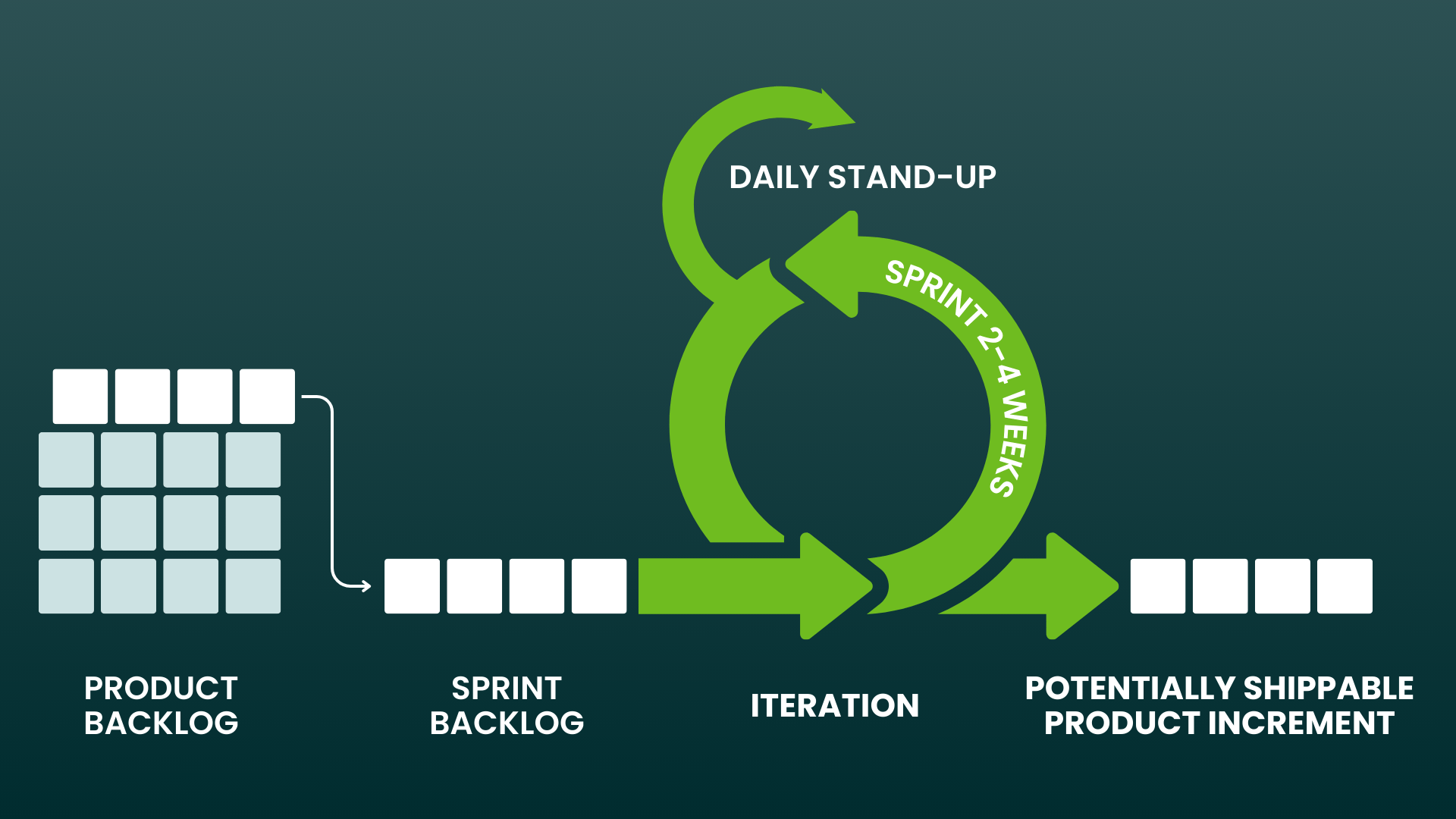
Before each sprint, the team gets together to determine what subset of work from the backlog will be on focus for the next period of active work. For a sprint to be considered successful, the team needs to have completed the subset of the general backlog they committed to before productive work began.
Before you keep reading, The Ropes gives you 100+ hours of FREE Agile marketing courses, exclusive resources, and certification & coaching giveaways — completely free.

Scrum Roles
Roles in Scrum are not vertical because they don't represent hierarchy; rather, cover different aspects of the Agile implementation. The Scrum Master is the process owner who makes sure the framework is being implemented correctly. The Product Owner in the marketing context is usually the Team Lead/Marketing Manager, as this is the person providing the business requirements and context to the wider execution team. In many resource-strapped Agile marketing teams, the Product Owner often acts as the Scrum Master as well as a team lead.
Here's a quick roles breakdown:
- Scrum Master (necessary in the software world, but optional in marketing)
- Product Owner (or Marketing Owner)
- Execution Team (flat, no hierarchy, cross-functional group of contributors)
Scrum Ceremonies
Scrum teams implement a strict schedule of meetings to create a routine and minimize the need for other meetings, which often take up too much of the team's productive time. Scrum events each focus on a specific purpose related to the sprint timebox itself.
Sprint
The sprint is the time for which the team will deliver the agreed X amount of tasks. It usually lasts between two and four weeks and its duration cannot be changed once it's begun.
Sprint Planning
Before the beginning of the sprint, the team gathers to discuss which subset of high priority items from their backlog will be the focus of their upcoming period of active work. They turn projects into tasks, volunteer for work, and ensure the items they've chosen are fully vetted and ready for their attention.
Daily Scrum
The daily scrum (or daily standup) brings the team together every day during the sprint to discuss progress of the tasks on the scrum board and address any blockers, issues, or delays.
Sprint Review
Once the timebox of execution has concluded, the team hosts a stakeholder review meeting to show and tell their completed work from during the sprint. Instead of hosting individual stakeholder updates, the review is a great forum to bring all relevant stakeholders together and update them en masse.
Sprint Retrospective
The team retrospective usually takes place after each sprint review and focuses on key takeaways that will act as drivers for positive change in the process of the team. No stakeholders are invited. Team only. Period.
Scrum Artifacts
Artifacts in Scrum are designed to improve visibility and opportunities for improvement within the team. They provide key information so that everybody has the same understanding of what's happening within the team.
- Product Backlog: the general backlog for the team, a single source of truth
- Sprint Backlog: the highest priority subset of the general backlog for the sprint
- Team board: Visual representation of what work is being done by the team at any given moment, including work assignments and blocks.

Blitz Test: Are You a Good Candidate for Scrum?
- Does your team collaborate with many other teams on a daily basis?
- Does your work mostly consist of projects with finite scope and clear deliverables?
- Do you find it hard to align internally and track progress?
- Are there other Agile teams in your organizations working using Scrum?
- Do you find it hard to estimate how much time and effort a project will take?
If you answer more than three of these questions with a YES, then your best shot might be starting off with SCRUM!
Consider Kanban: Toyota's Secret Weapon for Optimizing Process
The Kanban method for knowledge work, as formulated by David J. Anderson, consists of four basic principles and six core practices. The Kanban principles encourage teams to start slowly and layer on Kanban practices into their process gradually:
Kanban Basic Principles:
1) Start with what you do now
2) Agree to pursue incremental change
3) Respect the current process, roles, and responsibilities
4) Encourage acts of leadership
The Kanban core practices provide a simple, clear framework for promoting visibility and managing the workflow in a way that is inclusive to all team members:
Kanban Core Practices:
1) Visualize the workflow
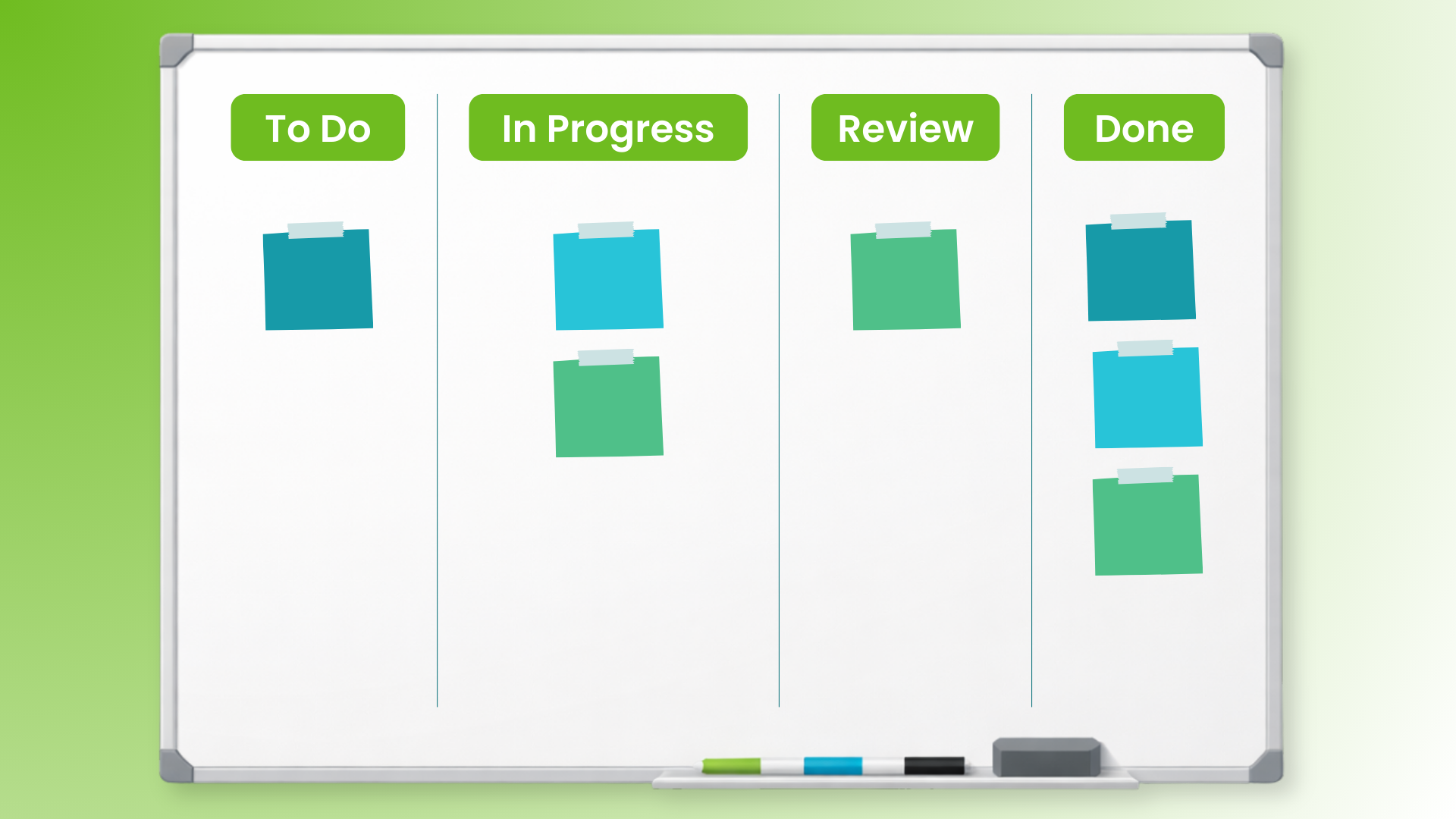
The main element of Kanban is the Kanban board, which helps teams to visualize workflow, discover bottlenecks in their process, and analyze efficiency and capacity.
2) Limit WIP (work in progress)
Work in progress limits encourage the team to avoid multitasking and start finishing the work items them begin working on. By reducing context switching, applying work in progress limits allows you to finish tasks faster and proceed with the next ones in the pipeline at a healthy pace.
3) Manage flow
Kanban is focused on shifting the focus from managing the people to managing the work. This helps avoid keeping teams busy all the time and fosters understanding of how we get work through the system faster to deliver to the customer early and often.
4) Make process and policies explicit
This practice refers to the Kanban process and policies that are agreed upon by team members. Making them explicit helps everyone stay on the same page regarding what's expected. As the team evolves, these policies may be revised to reflect the current situation.
5) Implement feedback loops
Also known as Kanban cadences, feedback loops are the means of driving continuous improvement on existing processes.
6) Improve collaboratively
Kanban focuses on Kaizen (continuous improvement) by encouraging the team to consistently evolve current process with the aim to eliminate wasteful activities and improve the value stream.
This Agile framework fits the the marketing team process because marketing work tends to be ongoing and recurring.
For example, there are monthly newsletters, weekly content updates, daily social media management, and so on. In some cases, it may prove to be lacking for teams that work on a project basis, because they often need the more prescriptive and time boxed approach of Scrum to deliver complex projects on time.
Blitz Test: Are You a Good Candidate for Kanban?
- Are you aimed at delivering more value to your customers without investing in a full Agile transformation at once?
- Is most of your work related to internal projects and consisting of repetitive tasks?
- Are your teammates proactive and eager to take ownership of initiatives?
- Is your team struggling to find time for meetings?
- Do you have a general agreement among the team members about how an ideal process should look like?
If your answer to more than three questions is YES, you should consider going for KANBAN!
Scrumban: The New Hybrid On the Agile Block
Scrumban mixes practices from Kanban and Scrum into a single solution for team looking for a more customizable framework.
The result is a unique combination of the Scrum ceremonies like Sprint Planning, Stand Ups, and Retrospectives, and the Kanban pull technique and WIP limits. Thus, it's driven by a pre-established schedule and customer demand at the same time.
Unlike pure Scrum, Scrumban doesn't focus on cross-functional teams. Rather, it embraces specialized roles within the team, which can sometimes present a more suitable way to handle diverse marketing skill sets. It embraces Kaizen and ditches the rigid schedule of meetings that often take up a large chunk of a Scrum team's productive time.
Blitz Test: Should Your Explore the Scrumban hybrid?
- Do you and your team have prior knowledge of Agile and Agile methodologies?
- Are you more comfortable to have different processes for different projects instead of a one-size-fits-all approach?
- Do you want to go Agile but think some aspects from Scrum and others from Kanban will fit your team best?
- Do you feel like it will be hard for your team to implement a Scrum/Kanban framework in at least one respect?
- Were you using Scrum but are considering a transition to Kanban at some point?
If you answer more than three of these questions with yes, SCRUMBAN is a hybrid framework worth exploring!
BONUS: Meet Rimarketing, the Agile Framework Built Marketers
Over years of working with marketing teams to implement Agile ways of working, our co-founder Andrea Fryrear struggled to find just the right combination of Agile practices. To ease this struggle for other marketers, she developed the Rimarketing framework.
Built on the idea that marketers often move from one kind of work to another, Rimarketing allows teams to shift from a flow-based, Kanban-style activity into iterations (sprints) and back again as needed.
Here's Andrea to explain:
Agile Framework FAQs
Which Agile framework is best for marketing teams?
There isn’t one “best” Agile framework for marketing—because marketing work varies widely by team. If you run mostly campaign-based work with clear deliverables and planned timelines, Scrum-style iterations can create focus and alignment. If your work is more always-on (content, web updates, social, ops requests) with frequent intake and shifting priorities, Kanban-style flow often fits better. Many marketing teams land in a hybrid once they understand their work patterns and constraints.
Can a marketing team use Scrum without being “product-driven”?
Yes. While Scrum originated in product development, marketing teams can still use its core mechanics—timeboxed planning, a prioritized backlog, and regular stakeholder reviews—to deliver value in short cycles. The key is adapting the backlog and “done” definitions to marketing outputs (launch-ready assets, approved campaigns, published content) and being realistic about what can stay stable during a sprint.
Is Kanban “just a board,” or is it a full Agile framework?
Kanban is more than a visual board. A board makes work visible, but Kanban becomes a framework when you add explicit policies, work-in-progress limits, feedback cadences, and active flow management. For marketing teams, that’s especially useful because it turns chaotic intake into a deliberate system: what gets pulled next, how blockers are handled, and how work moves from request to value delivered.
When should a marketing team use a hybrid like Scrumban?
A hybrid can be a great fit when marketing has both predictable and unpredictable work—like planned campaigns alongside constant stakeholder requests. Many teams use sprint-style planning for larger initiatives while managing day-to-day work in a Kanban flow. The key is clarity: define which work types follow which rules, keep WIP limits in place, and avoid “hybrid” becoming an excuse for skipping discipline.
Do we need to pick one Agile framework forever?
No. Framework choice should evolve as your team matures. Many marketing teams start with a more structured approach to build habits and alignment, then shift toward flow as they stabilize intake, reduce rework, and improve prioritization. The goal isn’t loyalty to a framework—it’s building a way of working that improves focus, speed, and outcomes over time.
Choosing an Agile Framework is Just the Beginning
Choosing the right Agile framework is a tough call for any team. Luckily, it is not a one-time choice.
Most teams either start with a more prescriptive model, like Scrum, to build healthy habits for the rest of their Agile journey or start with their current process and layer on more Agile practices as Kanban suggests.
In most cases, as marketing teams mature in their Agile implementations, they end up somewhere on the spectrum between the two frameworks, crafting their own unique hybrid that serves their purposes effectively.
As you discover more about what your team needs in terms of process, you may feel that you've outgrown a certain framework and opt to explore another one. It’s all about starting off on the right foot with Agile so you can build an even stronger Scrum, Kanban, Scrumban, or Rimarketing team!
Before moving on, don't forget to get our Agile Marketing Quick Start Guide!

Topics discussed
Improve your Marketing Ops every week
Subscribe to our blog to get insights sent directly to your inbox.