


Key Takeaways:
- Continuous change in marketing isn’t a phase—it’s the new baseline—so the goal isn’t control, it’s change readiness.
- The teams that stay calm and effective don’t “outbuild the ocean”; they build a sturdy, flexible operating system that can adapt repeatedly.
- Change readiness starts with mindset: your team’s beliefs about change/failure, emotional posture under uncertainty, and default behaviors determine whether you learn or freeze.
- A simple diagnostic: ask “What story are we telling ourselves about change?” If it’s threat-based, performance and experimentation will stall.
- Annual plans break in a volatile world; shorter planning cycles (quarterly → monthly → bi-weekly) create traction without chaos and reduce wasted effort.
- Faster work requires stronger feedback loops: frequent demos, real-time data, and early stakeholder input prevent big misses and accelerate wins.
- Treat prioritization as rolling reality-checks: a living backlog that gets re-ranked and pruned each sprint is responsiveness, not indecision.
- Cross-functional collaboration reduces handoffs, delays, and rework—when silos fall, speed rises.
- A shared Definition of Done cuts micromanagement, speeds approvals, and eliminates rework—small upfront alignment saves massive downstream time.
- Start practical: identify what’s slow and what’s siloed, reinforce what already flows, then improve rhythm, feedback, and collaboration from there.
Welcome, fellow marketers, to the era of continuous change, where what you mastered yesterday is already slipping toward obsolescence.
A channel you’ve never heard of could be your largest lead source next year.
A technology you barely understand might reshape how you work before next quarter.
Some days this momentum feels energizing. Other days it makes you want to curl up under a blanket and pretend you live in a cave with no Wi-Fi.
Either way, the waves aren’t stopping. The pace isn’t slowing.
Our job isn’t to stop the ocean. Our job is to build a boat sturdy enough – and flexible enough – to ride it.
An Example of Terrifying Change
Recently, I sat on a leadership panel with CEOs from other professional services organizations. We meet monthly to share how we’re using AI, where it's helping, and where it’s creating risk.
This time, we brought in a lawyer who specializes in AI law and copyright. Friends, holy wow.
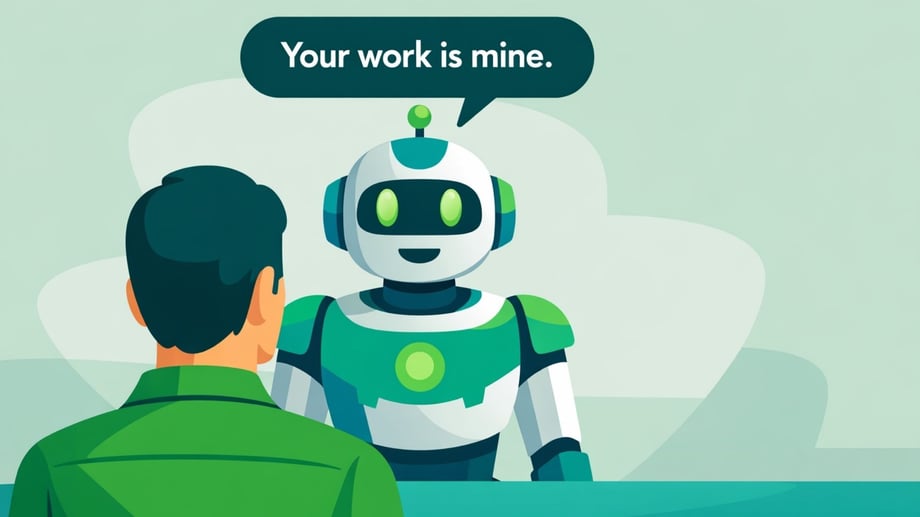
I expected a conversation about guidelines and compliance. What I got instead was a full-on philosophical earthquake about ownership, authorship, and the future of creative work.
Consider this: if you push a button on a camera, you own the copyright to the photo. But if you spend hours crafting an AI prompt, refining it, iterating on it, and coaxing something truly original from a model – you don’t own that output. Not under current law.
And if you're writing a book with AI’s help, this lawyer recommended documenting every single AI-influenced word. Every word!
Welcome to marketing in 2026: moving at warp speed while simultaneously asking us to slow down and document our existence like medieval scribes.
And in the middle of all this chaos, the business still wants us to hit KPIs. Generate leads. Fill pipeline. Deliver growth.
So no, it’s not getting simpler.
The waves aren’t calming down. They’re getting bigger. Stronger. More unpredictable.
And we can’t outbuild the ocean with walls or dams. Eventually the water wins.
Instead, we build boats. We build buoyancy. We build change readiness into our organizational DNA.
This is where mindset meets process – the “what” and the “how” of Agile marketing. Let’s break down how we strengthen both.
Getting Your Mind Right: The Mindset Behind Change-Ready Marketing
Before we overhaul workflows or stand up new Agile practices, we need to get honest about our mindset.
Mindset is simply the collection of attitudes, beliefs, and assumptions running in the background while we work. It’s our mental operating system, shaping how we interpret disruption, how we make decisions, and how we respond under pressure.
I admit it: I’ve always found the Agile obsession with mindset a little squishy.
It can become a cop-out – “We can’t improve anything until we fix our mindset!”
But mindset does matter.
It influences behavior, and behavior determines culture. You don’t get a change-ready culture without a change-ready mindset.
Three dimensions define that mindset:
1. Cognitive Beliefs: What You Believe About Change and Failure
Do you see change as a threat or an opportunity?
Do you believe failure is a learning lab or a career risk?
Do you assume new tools will take your job, or help you level up?
These beliefs influence every meeting, every experiment, and every attempt to adopt something new. They’re the difference between:
“This won’t work; we’ve never done it before.”
and
“We’ve never tried this; we could be first.”
That’s fixed mindset vs. growth mindset in a nutshell.
2. Emotional Posture: How You Feel About Uncertainty
When ambiguity shows up at your doorstep, do you tense up or lean in?
An open, optimistic emotional posture makes us more resilient. It lets us pivot without panic.
In contrast, a defensive posture makes us brittle – and brittleness is a liability in a volatile environment. We need to be able to bob and weave, not freeze.
3. Behavioral Orientation: What You Actually Do When Change Appears
Beliefs and feelings matter, but behavior is where the rubber meets the road.
Do you resist?
Do you procrastinate and hope change goes away?
Or do you ask questions, stay curious, and co-create the path forward?
Behavior is culture in motion. And culture is the real engine of change readiness.
If you’re unsure where your team stands today, ask this simple question:
What story is your team telling itself about change?
Is it a threat? A disruption? A chance to grow?
If the story isn’t energizing, it’s time to rewrite it.
Before you keep reading, The Ropes gives you 100+ hours of FREE Agile marketing courses, exclusive resources, and certification & coaching giveaways — completely free.

The Processes That Make You Change-Ready (For Real This Time)
Once the mindset foundation is set – or at least under construction – we move into process.
Agile processes aren’t there to make us “more Agile.” They’re there to help us adapt rapidly and repeatedly, no matter what new curveball hits the market.
Here are five that matter most.
1. Shorter, Faster Planning Cycles
Annual planning is a relic of a slower world; we simply can’t predict 12 months out with any accuracy. Quarterly is the longest planning horizon that makes sense today. Monthly is better. Bi-weekly sprints are best.
Shorter cycles help us:
- Get things done before they become irrelevant
- Course-correct quickly
- Avoid wasting entire months on the wrong bet
And those Agile ceremonies we love – standups, sprint planning, retros, demos – aren’t bureaucracy. They’re rhythm. They’re traction. They keep fast work from becoming chaotic work.

2. Constant Feedback Loops from Stakeholders and Customers
If you're going to move faster, you need guardrails. That means:
- Demos to stakeholders early and often
- Real-time performance data
- Celebration of “bad data” because it saved you from a bigger mistake
When we get feedback every two weeks instead of every two months, we avoid disasters and accelerate wins.
3. Rolling Prioritization Instead of “Set It and Forget It” Plans
The backlog is a living, breathing organism. It should evolve as you learn. And yes, it means letting go of pet projects. Even your favorites.
Before each sprint:
- Re-rank the backlog
- Remove irrelevant work
- Add new opportunities
- Reflect the current reality, not last quarter’s assumptions
This isn’t indecision, it’s intelligence.
4. True Cross-Functional Collaboration
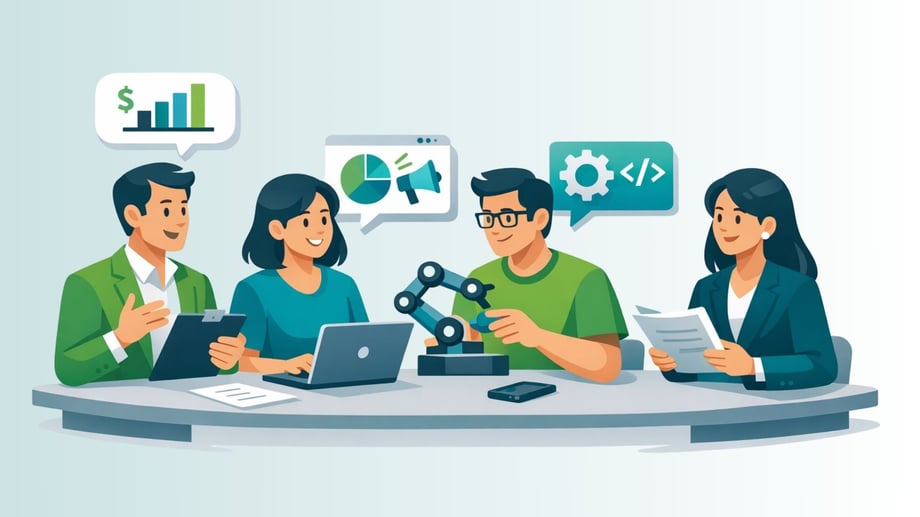
Silos are one of the biggest killers of speed, quality, and creativity in marketing.
Every handoff introduces delay. Every miscommunication introduces rework.
To break the cycle, we must:
- Co-create with sales, product, CX, and legal
- Invite partners into sprint planning
- Bring them into demos
- Surface opportunities for reuse and shared value
When silos fall, speed rises.
5. A Crystal-Clear Definition of Done
This one seems deceptively small, but it’s a powerhouse.
Getting everyone aligned before work begins on what “done” actually means:
- Cuts micromanagement
- Speeds approvals
- Improves quality
- Eliminates rework
- Reduces frustration for everyone
It’s 30 minutes upfront to save 30 hours down the road.
So Where Do You Start?
Begin with two simple questions:
- What’s slow?
- What’s siloed?
Then look for bright spots – the areas already flowing smoothly. Don’t break what’s working.
Instead, shift your team’s rhythm. Speed up planning. Tighten feedback loops. Try cross-functional demos. And above all, get curious together.
If you’re not sure where your biggest gaps are, our free Agile Marketing Assessment will help. It scores you across nine core dimensions of Agile marketing – mindset, process, data, planning, customer centricity, and more – so you know exactly where to focus next.
The waves of change aren’t going anywhere.
But with the right mindset and a strong Agile operating system, you won’t just survive them. You’ll ride them with confidence.

Topics discussed

Improve your Marketing Ops every week
Subscribe to our blog to get insights sent directly to your inbox.